Iran-US Military Clashes Escalate as Oil Holds Steady
US strikes Iranian infrastructure and Bahrain takes missiles, yet crude barely budges — here's what traders need to know.
The Middle East just got a lot hotter. The US hit two railway bridges in Iran's Golestan province with cruise missiles — the first American strike on Iranian infrastructure since the ceasefire lapsed. CENTCOM didn't stop there, reporting strikes on roughly 90 Iranian coastal military targets, including air defense systems, missile and drone storage sites, and naval logistics. That's not a warning shot. That's a campaign.
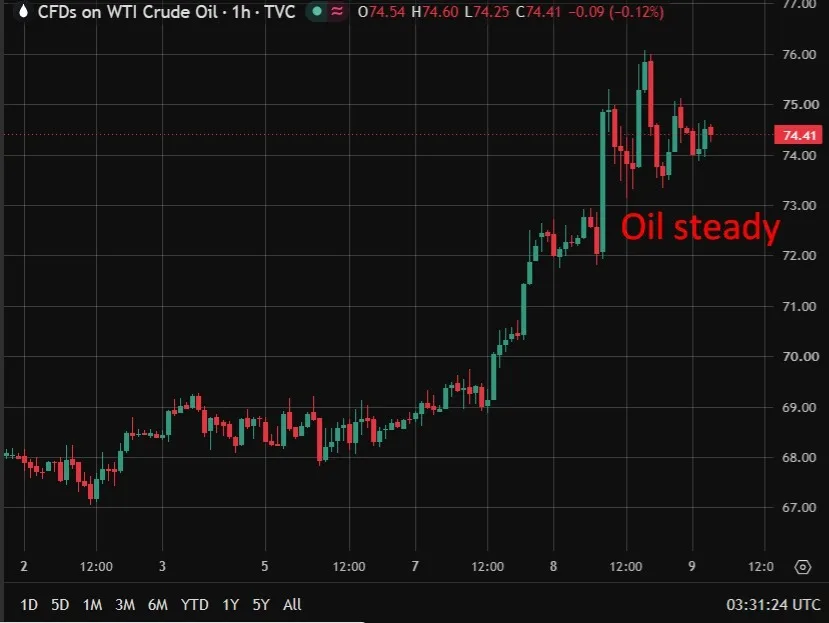
Iran fired back fast. The IRGC launched missiles at Bahrain, with sirens reportedly going off across the Gulf. Iran's parliament speaker made a pointed threat: the Strait of Hormuz won't reopen without a price. If that chokepoint — which handles roughly 20% of global oil flow — gets seriously disrupted, you'll see crude move in ways that make the session's 7% intraday spike look tame. Right now, oil is barely reacting, which means either the market is disbelieving the threat or already pricing in de-escalation.
Read more Renewable Energy Dominates New Grid Capacity at 90 Percent →
On that front, Trump said Iranians called him and want to make a deal. That's the bid under oil right now. If talks collapse or the Hormuz threat becomes operational, all bets are off. Watch Brent like a hawk. Any confirmed Iranian action in the strait is an immediate long crude, short risk-assets signal.
Elsewhere in Asia-Pacific, the Bank of Korea flagged a potential rate hike as inflation runs hot, China's factory-gate prices hit a four-year high while CPI came in below expectations at 1% year-over-year, and chipmaker gains lifted the Nikkei and Kospi. Nvidia's getting a Bank of America upgrade-adjacent call — apparently it's too cheap relative to peers. The regional macro backdrop is tightening, and geopolitical risk is layered on top.
Bottom line: the Iran-US situation is fluid and dangerous. Don't get complacent just because oil isn't screaming yet. The Hormuz card is still on the table. Continue reading at Forexlive.